 Shafaat Choyon.
Essays · AI
Essays on AI in production.
I build and run AI in production, including Ask Shafaat, a grounded AI assistant built on my published work. These essays are about what AI does once it leaves the demo: verification, accountability, regulation, and whose work it changes.
In this topic: AI in production: verification and accountability Health AI Rules and regulation AI for Bangladesh and the next billion AI, work and the customer
AI in production: verification and accountability 7
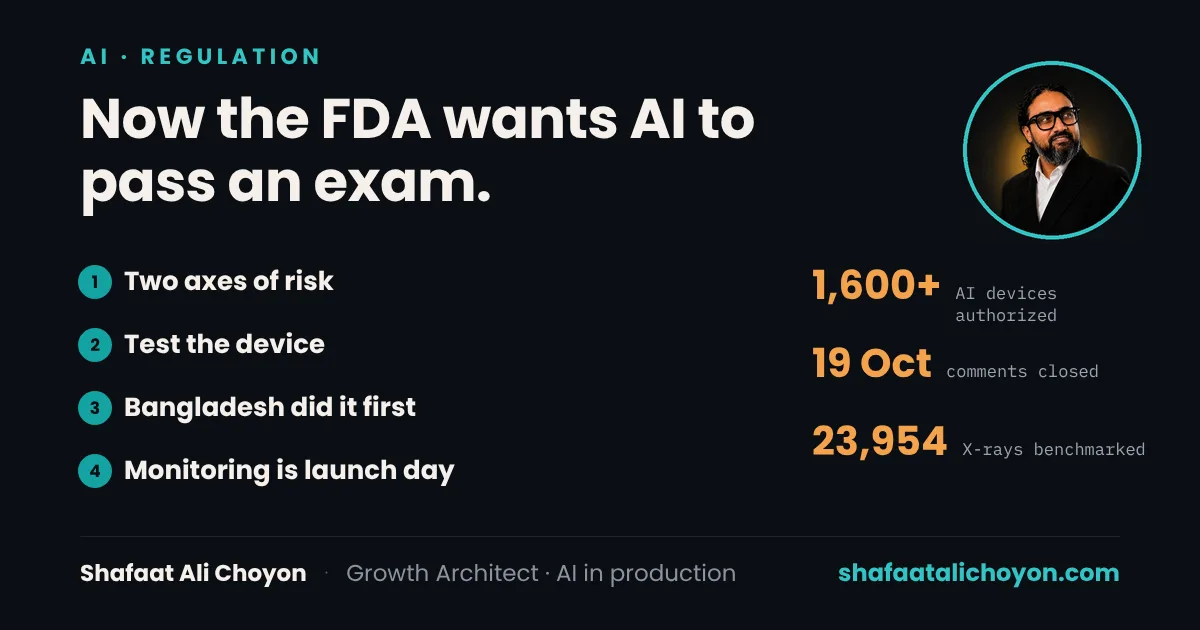
Verification is the product, and now the FDA says so
The FDA wants generative and agentic AI devices tested the way we test doctors: benchmarked before launch, confirmed in the clinic, and monitored after. Bangladesh ran that kind of test on AI chest X-ray readers years ago.
Jan 13, 2027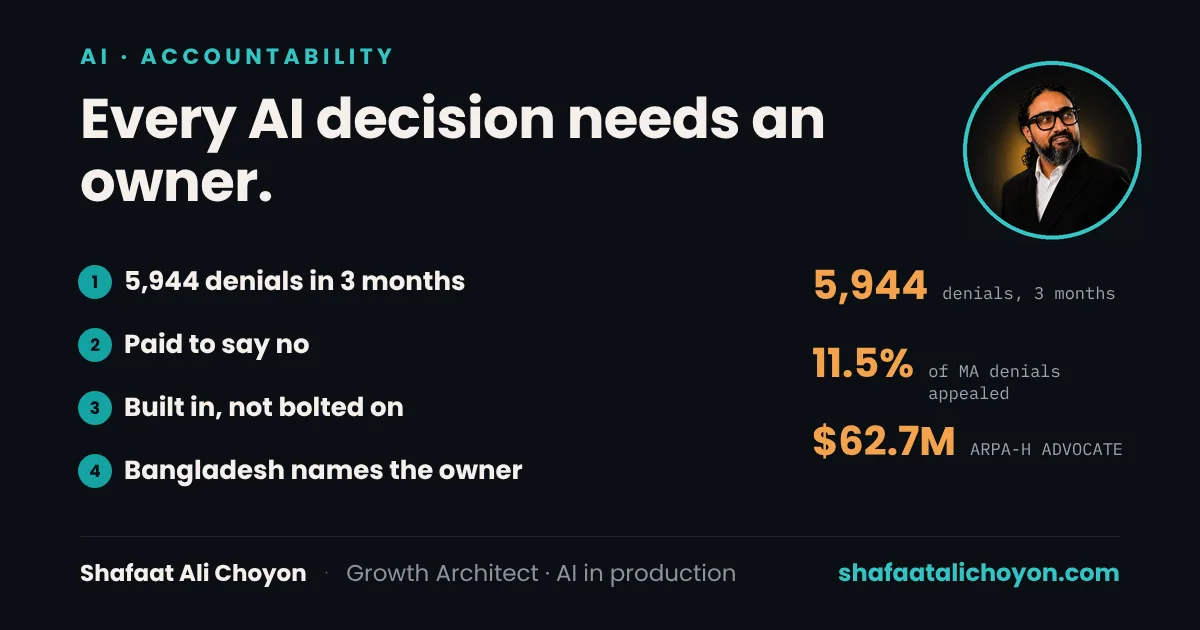
Who is accountable when the agent decides?
In three months, two vendors in Medicare's AI prior authorization pilot denied 5,944 requests. The same government is spending $62.7 million on heart failure agents with accountability built in. The difference is an owner and an audit trail.
Jan 3, 2027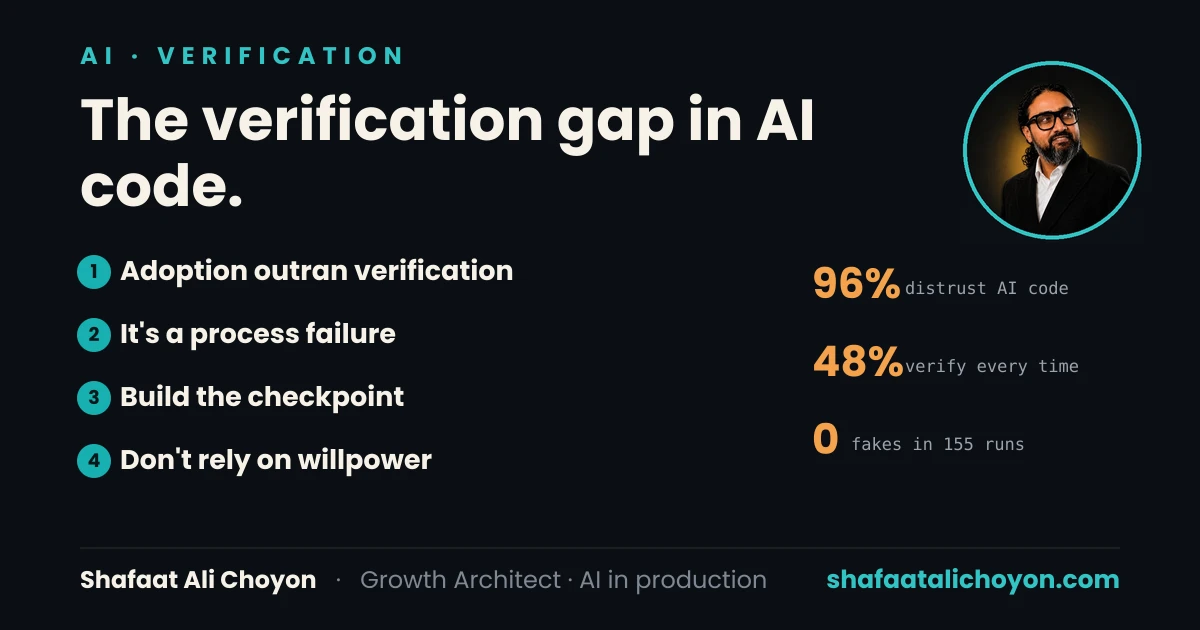
The Verification Gap in AI Code
96% of developers don't fully trust AI-generated code, only 48% verify it every time. The risk was never bad code, it's shipping with no verification layer.
Oct 7, 2026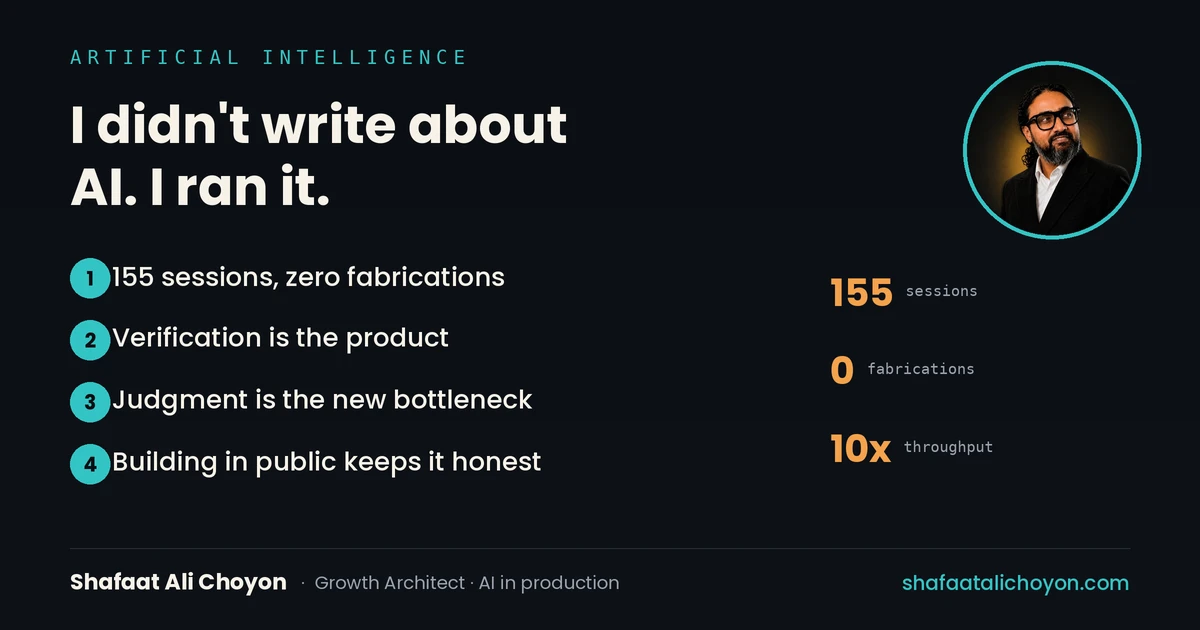
Building in public with AI: what I learned running my own
I didn't just write about AI this quarter: I ran it. A system built for my own work: 155 sessions, zero fabricated facts, verification built in from the start.
Sep 30, 2026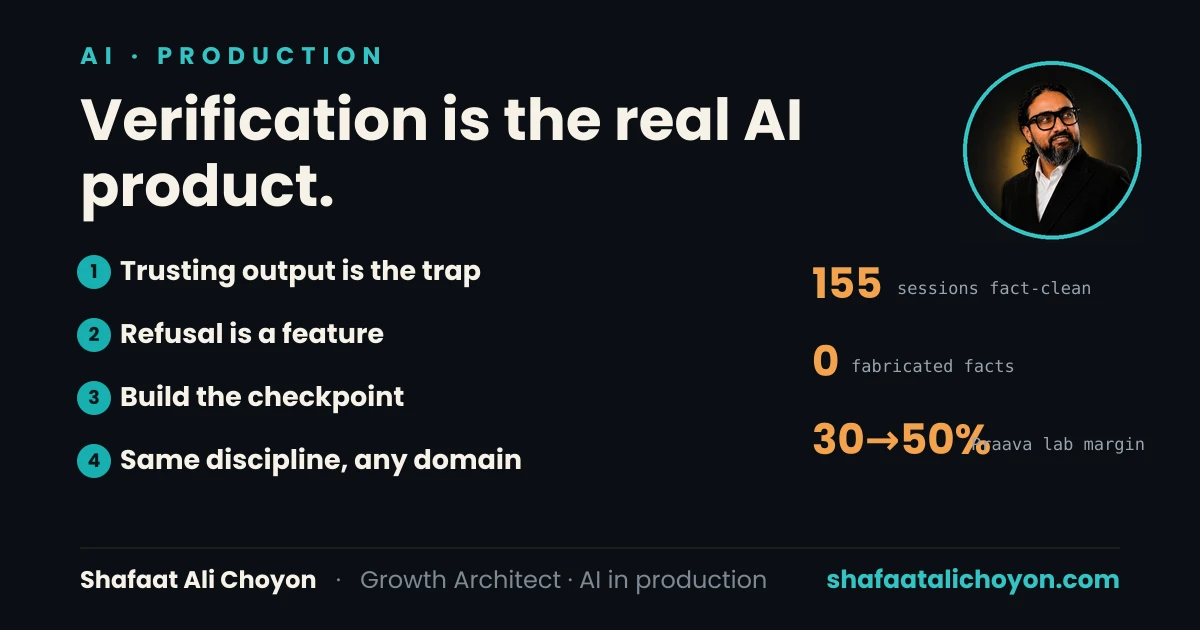
Verification Is the Real Product of Running AI in Production
The gap between an AI demo and a production system is verification architecture. Inside the source-checking and refusal design that keeps 155 sessions fact-clean.
Aug 29, 2026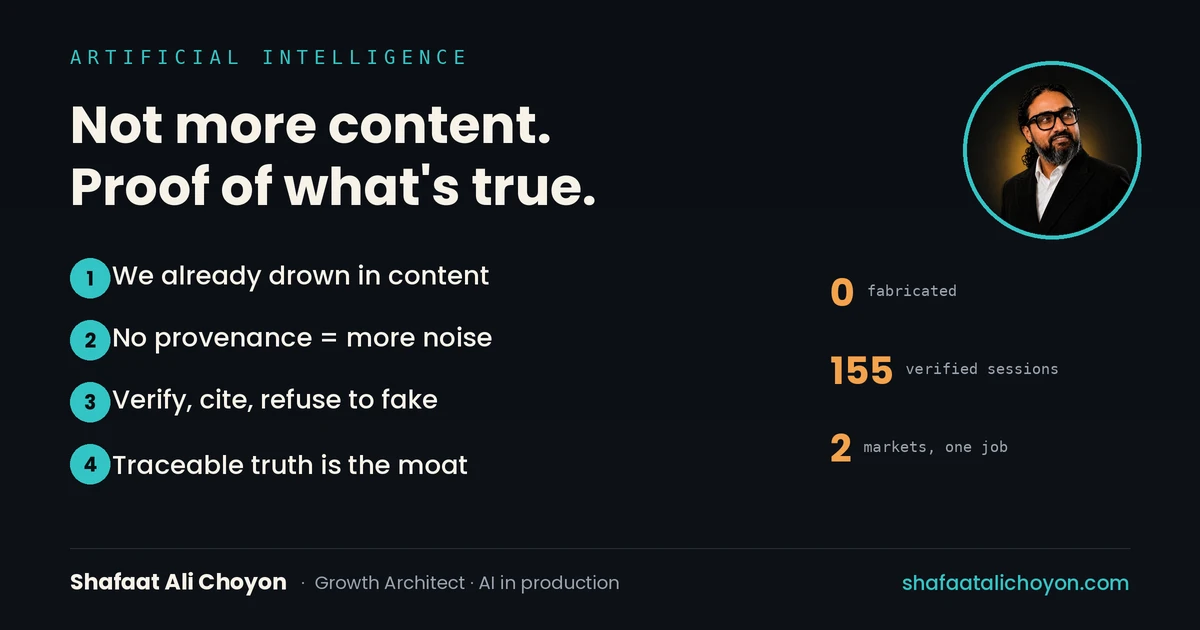
Provenance over volume - AI's next health win
The AI health rush chases the wrong verb. Everyone races to generate more; the scarce thing was never volume: it's proving what's true and where it came from.
Jul 29, 2026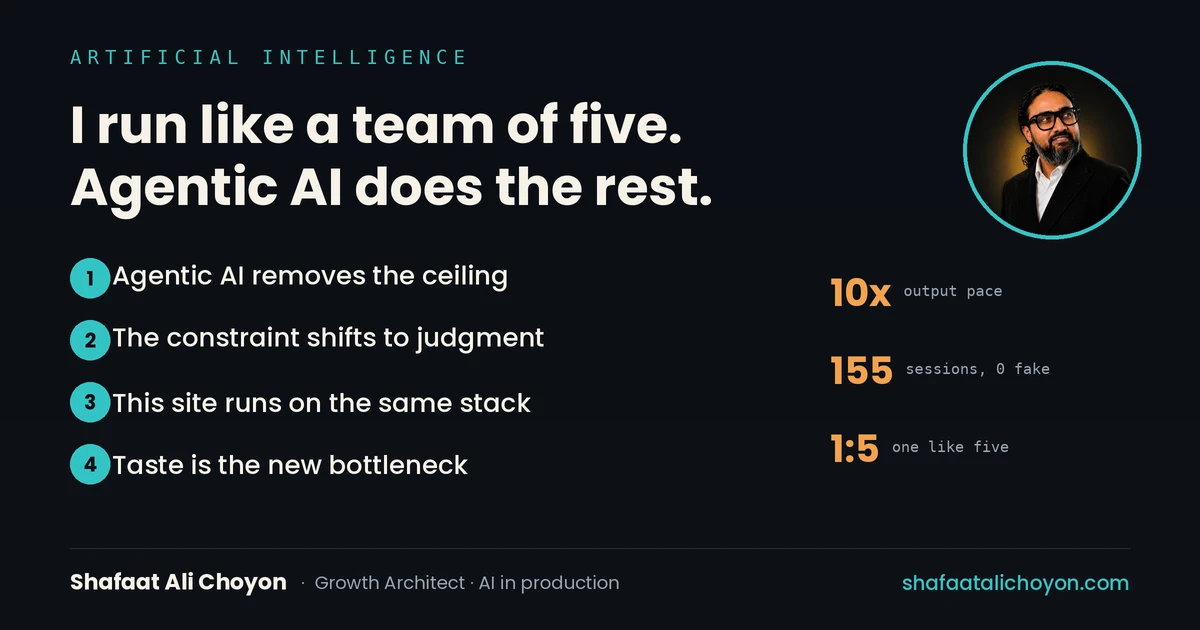
The agentic solo operator: a team of one
Agentic AI removed the ceiling on what one operator can ship. Field notes from running a full growth engine solo: where judgment, not labor, is the limit.
Jul 21, 2026Health AI 5
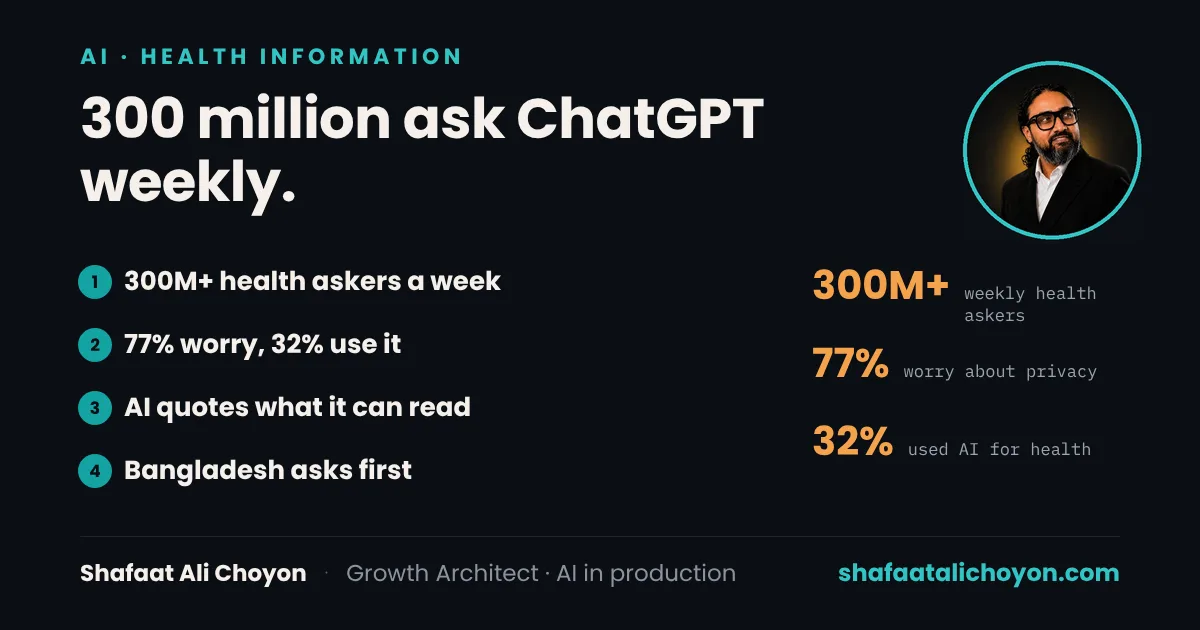
300 million people a week ask ChatGPT about their health
OpenAI says more than 300 million people a week ask ChatGPT health questions, and US users can now connect their medical records. Consent turned out to be a design problem. The next contest is over whose plain-language page the answer quotes.
Jan 10, 2027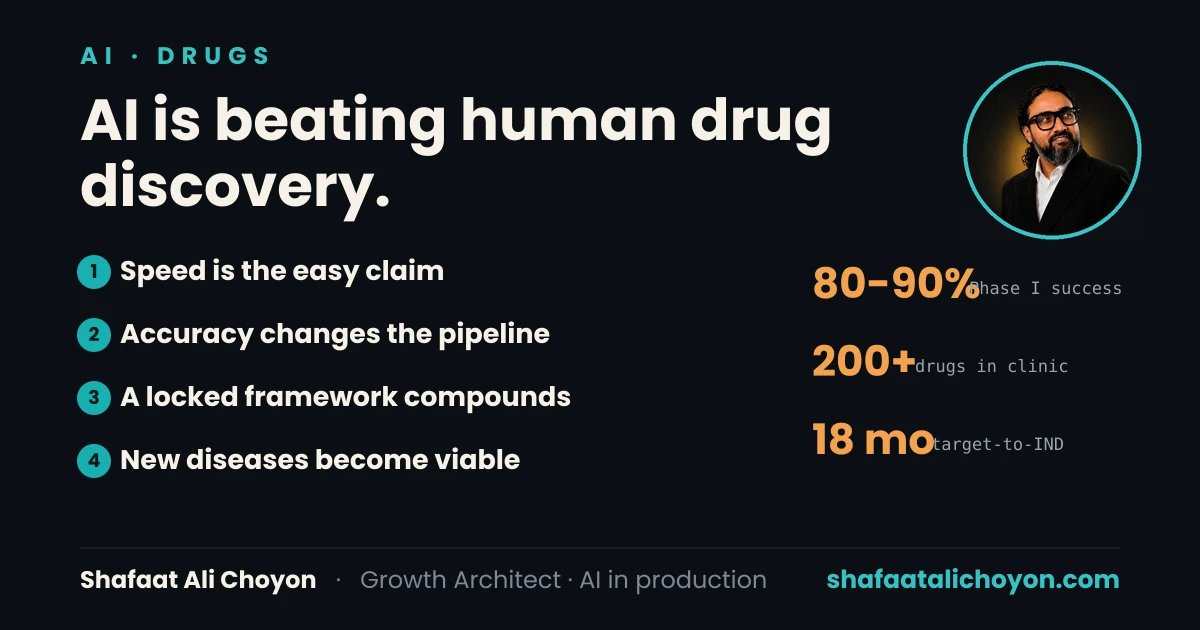
AI Is Now Beating Human Drug Discovery on Its Own Numbers
200+ AI-designed drugs are in clinical development with 80-90% Phase I success versus 40-65% traditionally. AI isn't just faster at discovery, it's more accurate.
Aug 22, 2026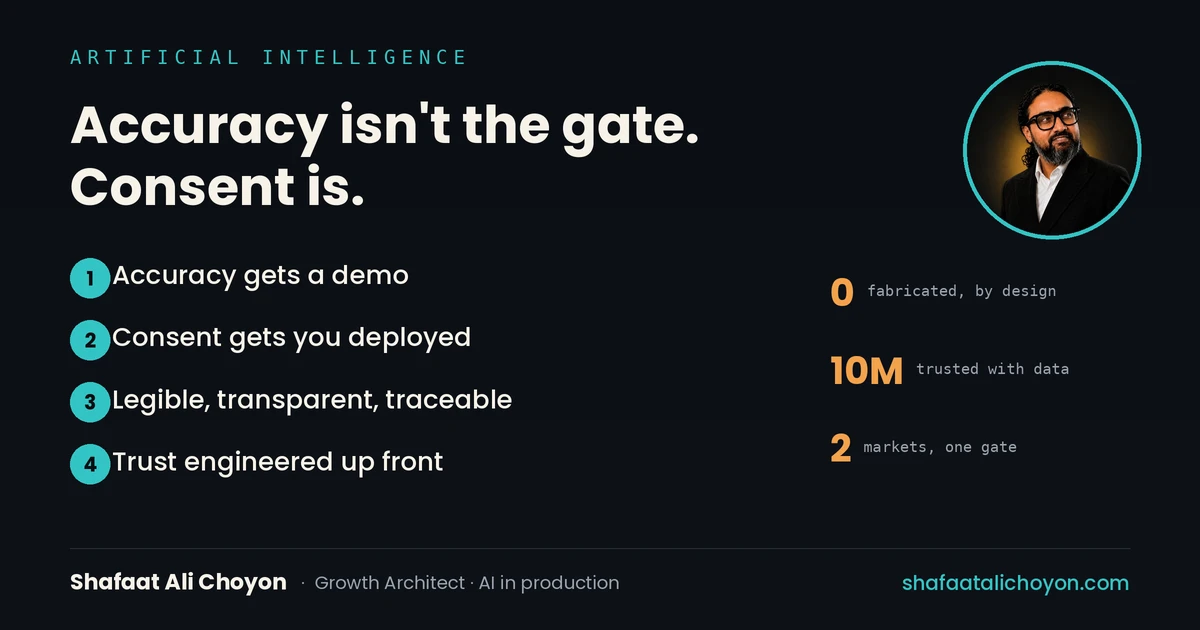
The consent problem - health AI's real bottleneck
Every debate about health AI fixates on accuracy. What actually stalls it is trust by design: consent, privacy, and provenance: the layer nobody demos.
Aug 6, 2026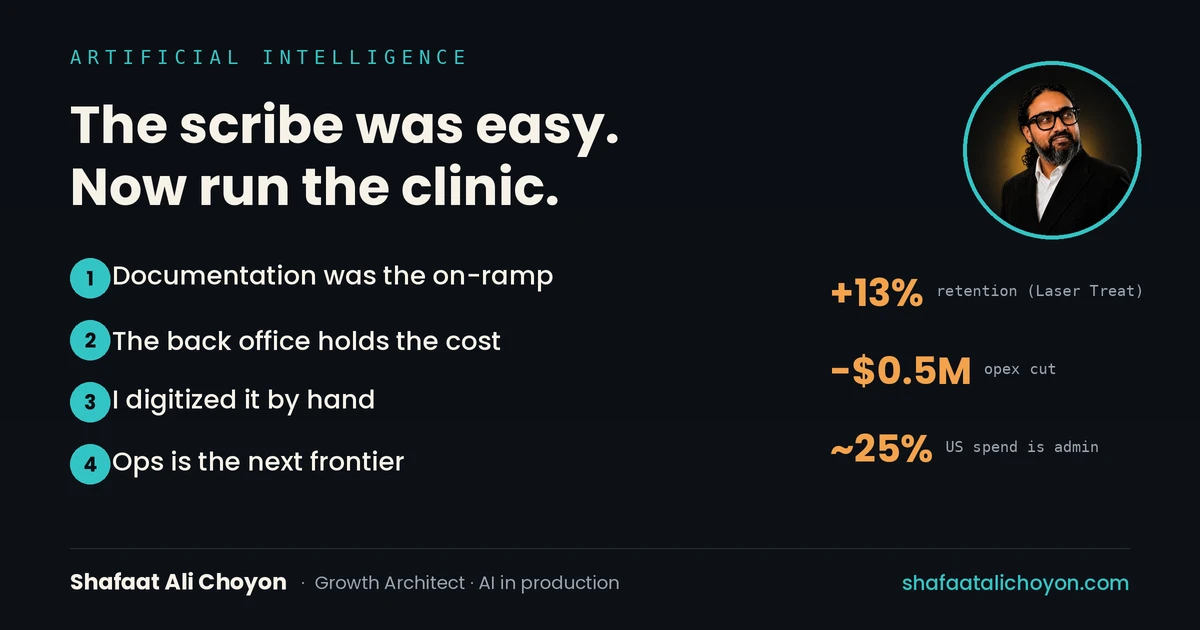
After the scribe: where health AI goes next
The AI scribe was the easy win. The real 2026 question is what AI does after the note: in the back office where the money and the misery live.
Aug 2, 2026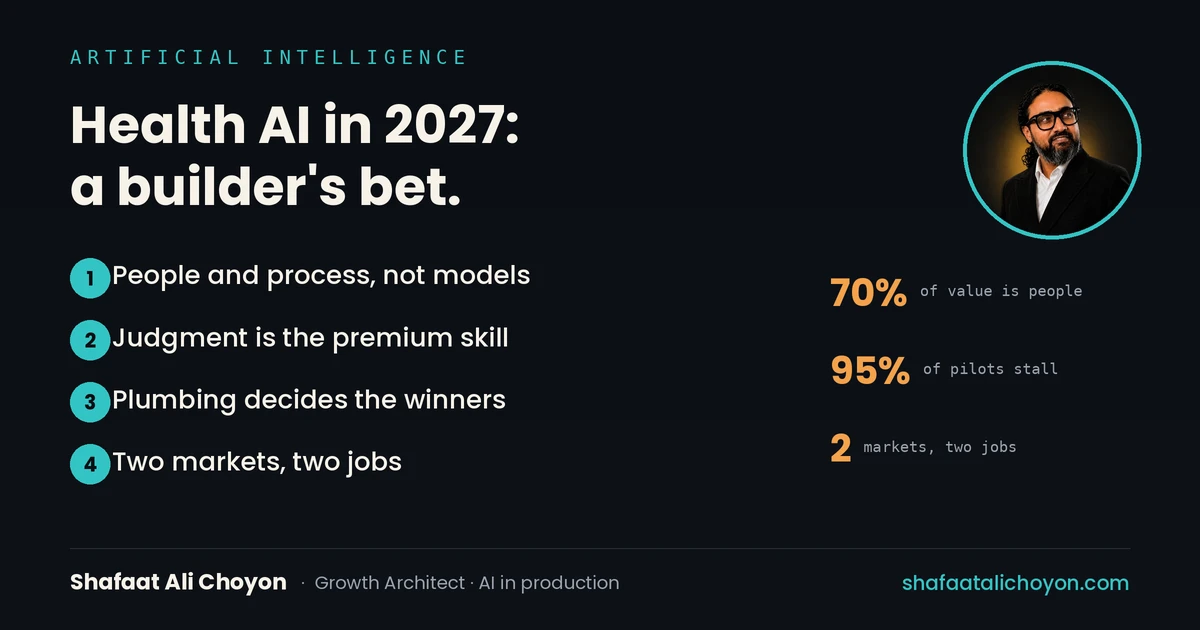
Where health AI actually lands by 2027: a builder's bet
Adoption is done. Three bets on where health AI actually lands by 2027: people over models, judgment, and plumbing: each grounded in work I've shipped.
Jul 19, 2026Rules and regulation 4
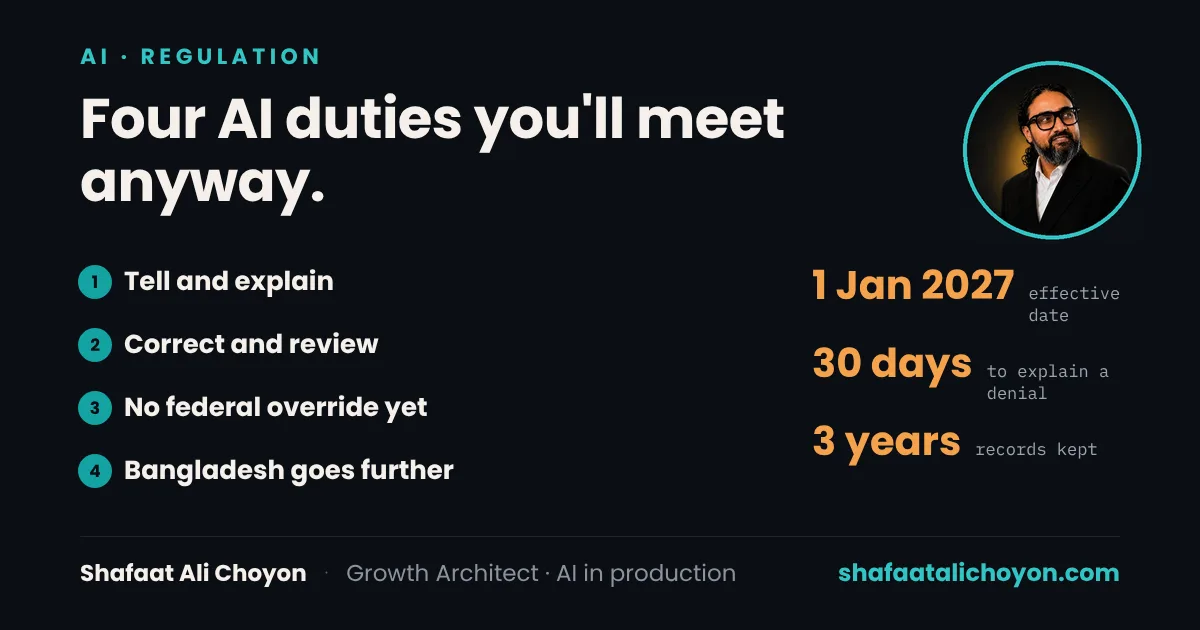
Colorado rewrote its AI law: four duties every AI product will meet anyway
From 1 January 2027, Colorado will require four things of any AI that shapes a decision about your job, loan, insurance or care. They are narrower than the old law, and they are what a good product does anyway. Build them once, for the strictest market.
Dec 19, 2026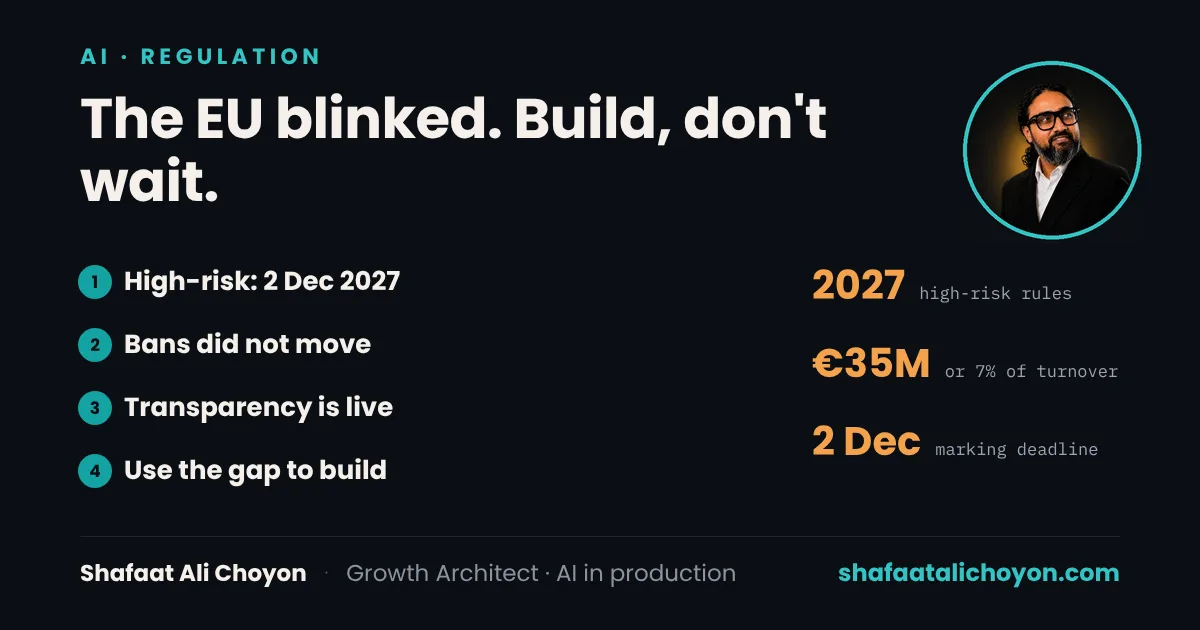
The EU blinked on AI. Use the extra 16 months to build, not wait
The Digital Omnibus pushed the EU AI Act's high-risk rules to December 2027. The bans, the transparency rules and the fines did not move. Here is what changed, what did not, and what to build in the gap.
Oct 27, 2026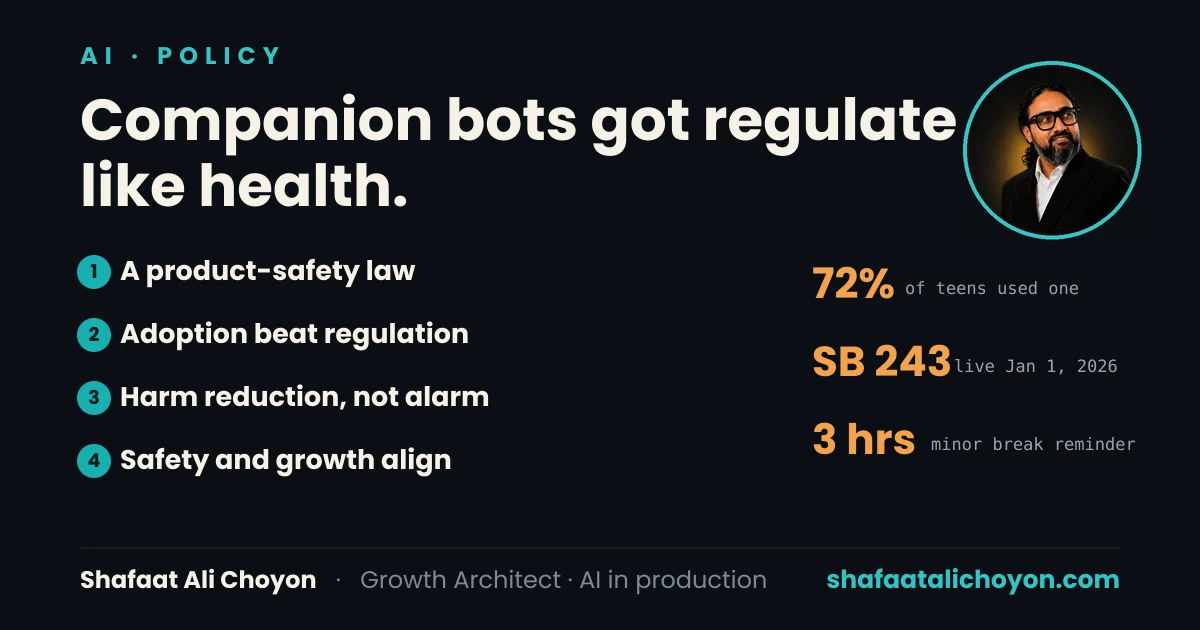
Companion Bots Just Got Regulated Like a Health Product
California's SB 243 and a parallel New York law now require AI companion apps to disclose, detect self-harm risk, and protect minors, after 72% of teens used one.
Aug 15, 2026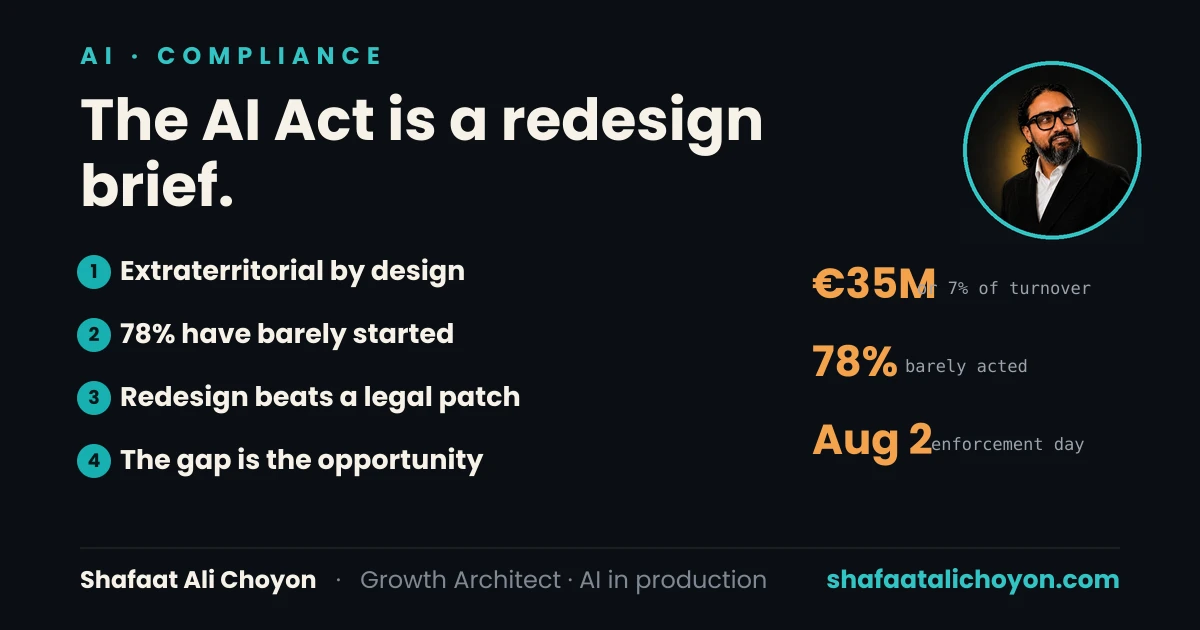
The EU AI Act's Enforcement Deadline Is a Redesign Brief
The EU AI Act high-risk rules now start 2 December 2027, with fines up to €35M or 7% of global turnover. Compliance is a redesign problem, not a legal one.
Aug 1, 2026AI for Bangladesh and the next billion 6
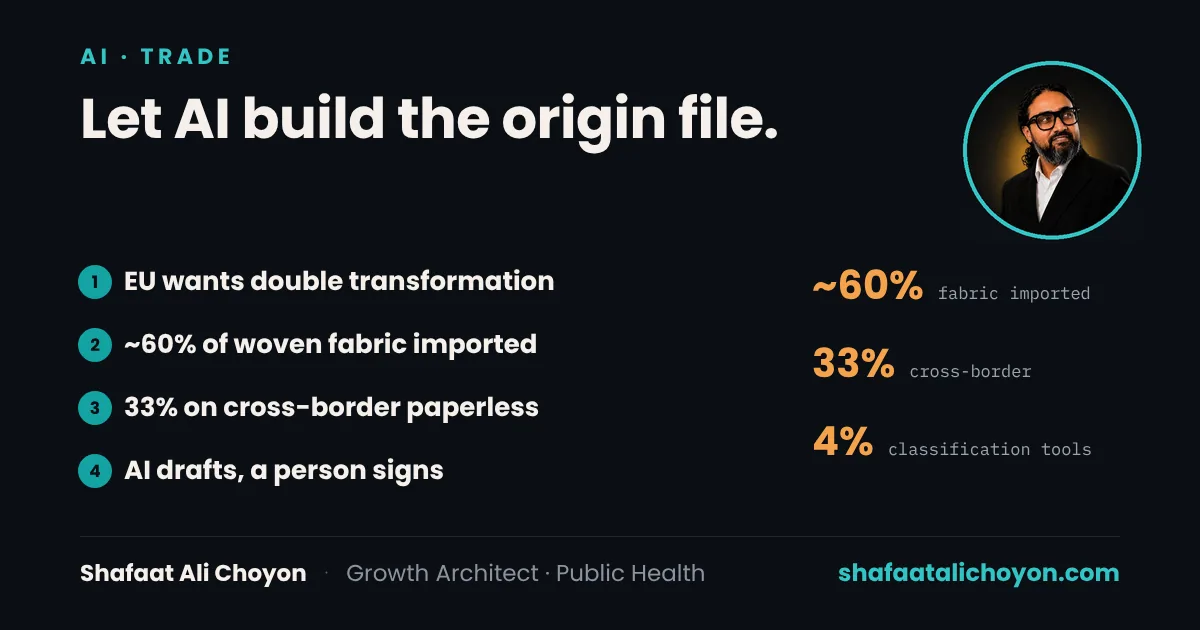
After graduation, every shipment must prove its origin. Let AI build the file
When Bangladesh leaves the least developed country group, keeping preferential access means proving where a product's materials and processing came from, under different rules for each market. That proof is a data problem. AI can assemble the evidence file; a person still signs it.
Dec 1, 2026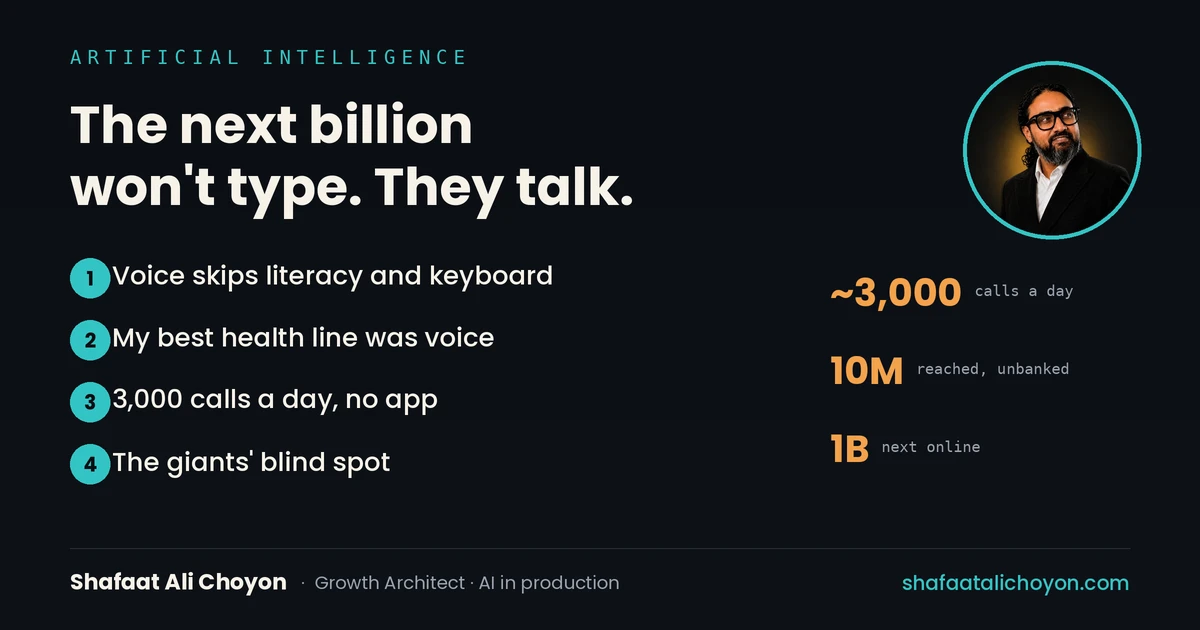
Voice-first AI for the next billion
The last billion online won't type: they'll talk. Voice skips the two barriers keeping AI from those who need it most: literacy and the keyboard.
Sep 25, 2026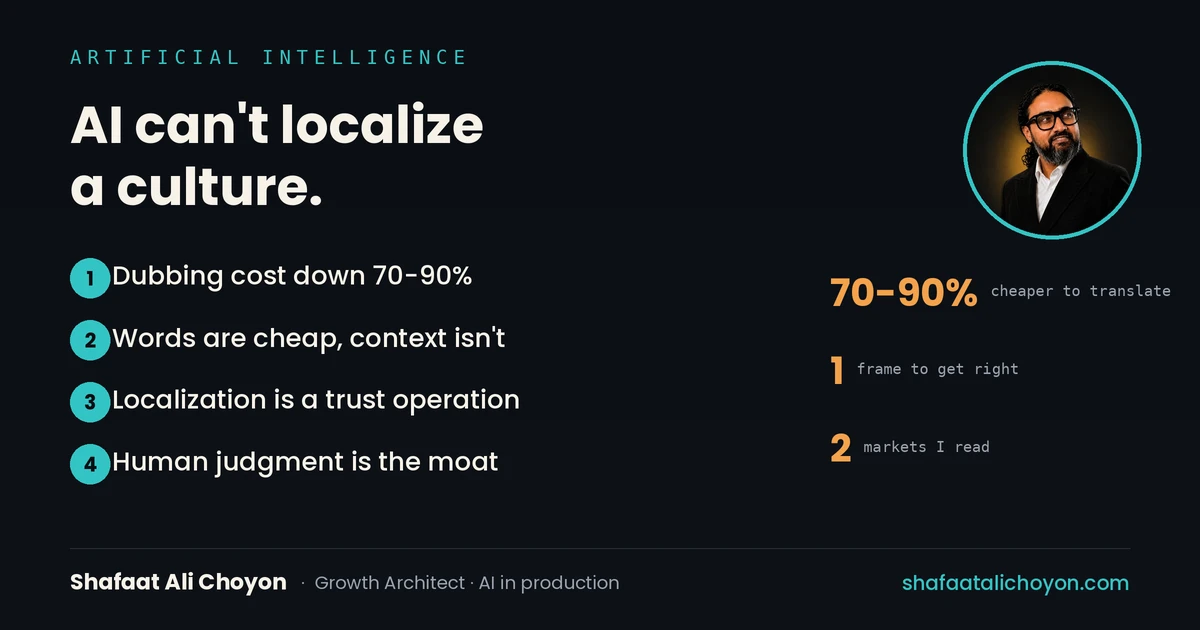
AI can translate words, not localize culture
AI dubbing cuts localization cost 70-90%; translation is nearly free. But translating words isn't localizing culture: and that gap is where judgment wins.
Sep 23, 2026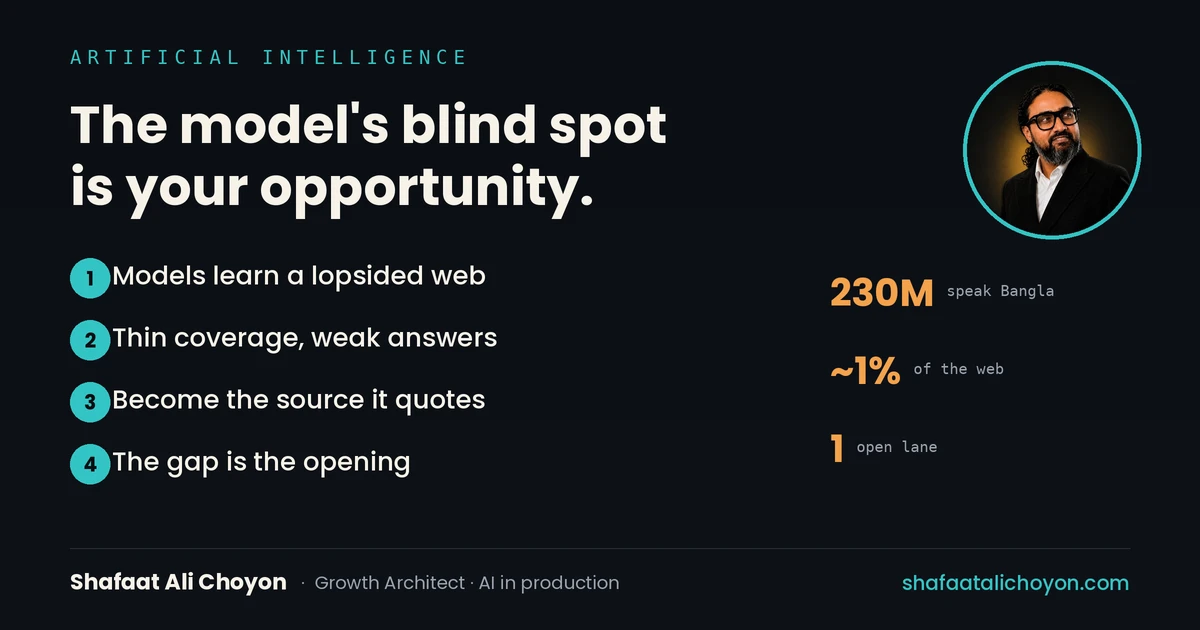
The model's blind spot is your opportunity
AI models learn from a lopsided web. Every language and market it underrepresents is where models are weak: and where you can win. The gap is the opening.
Sep 16, 2026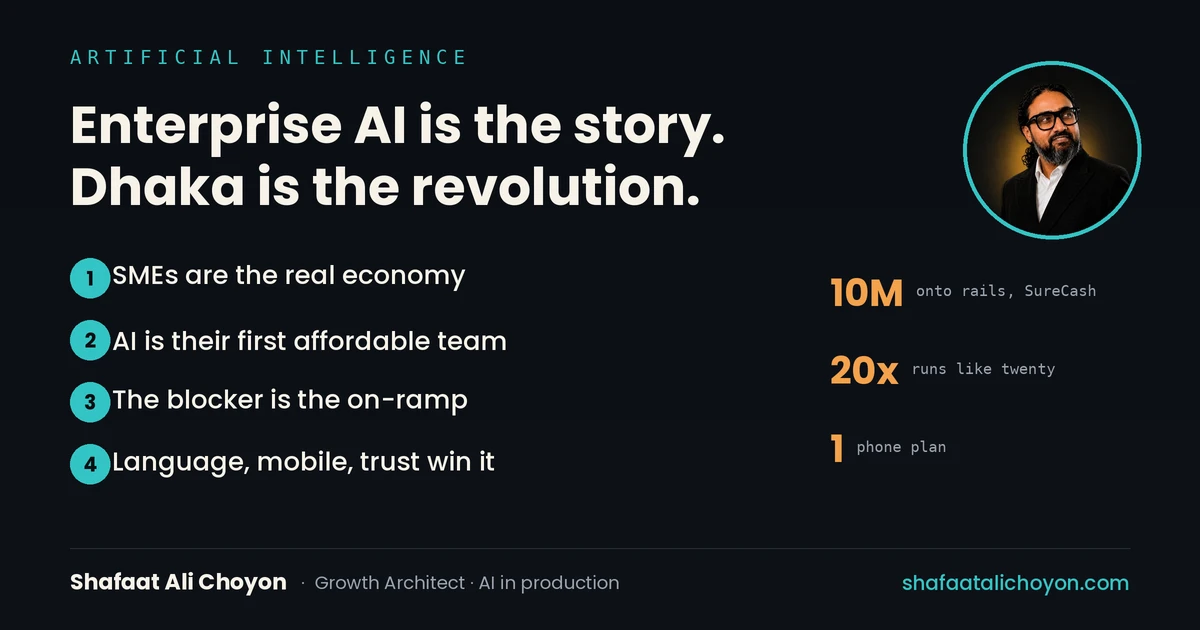
AI for the two-person Dhaka business
Everyone tells the enterprise AI story. The one that matters: a two-person Dhaka shop running like a twenty-person one: an SME's first affordable team.
Jul 25, 2026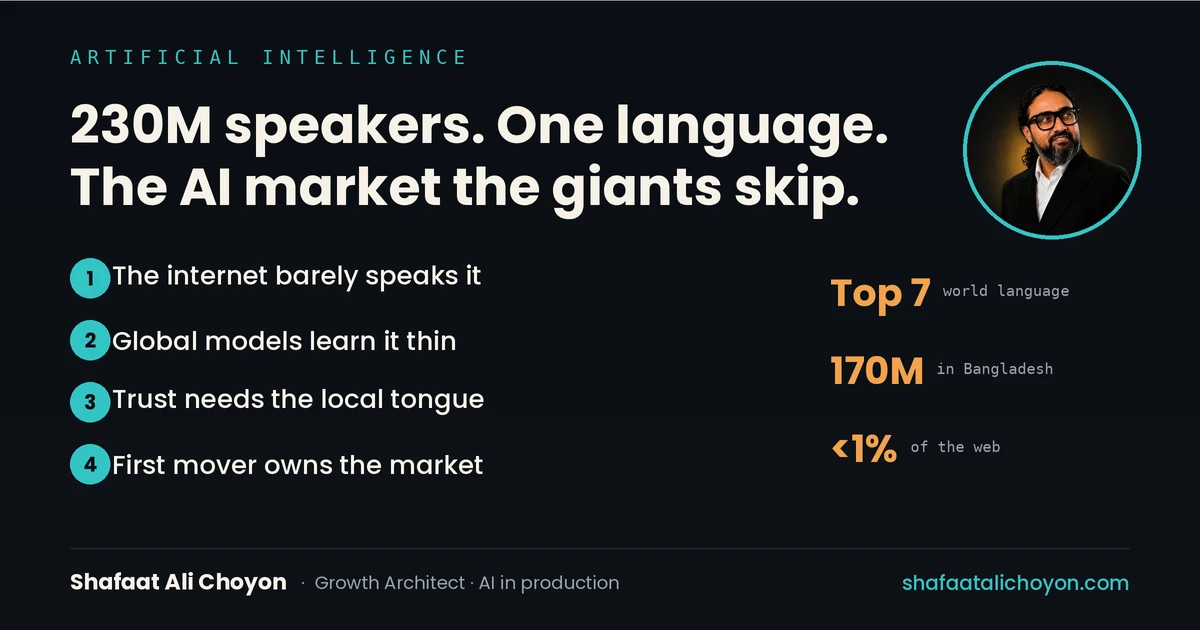
Bangla-first AI: the market the giants keep skipping
Bengali is a top-seven world language and barely a fraction of the web. A builder's dual-market case for the opportunity the giants overlook.
Jul 15, 2026AI, work and the customer 6
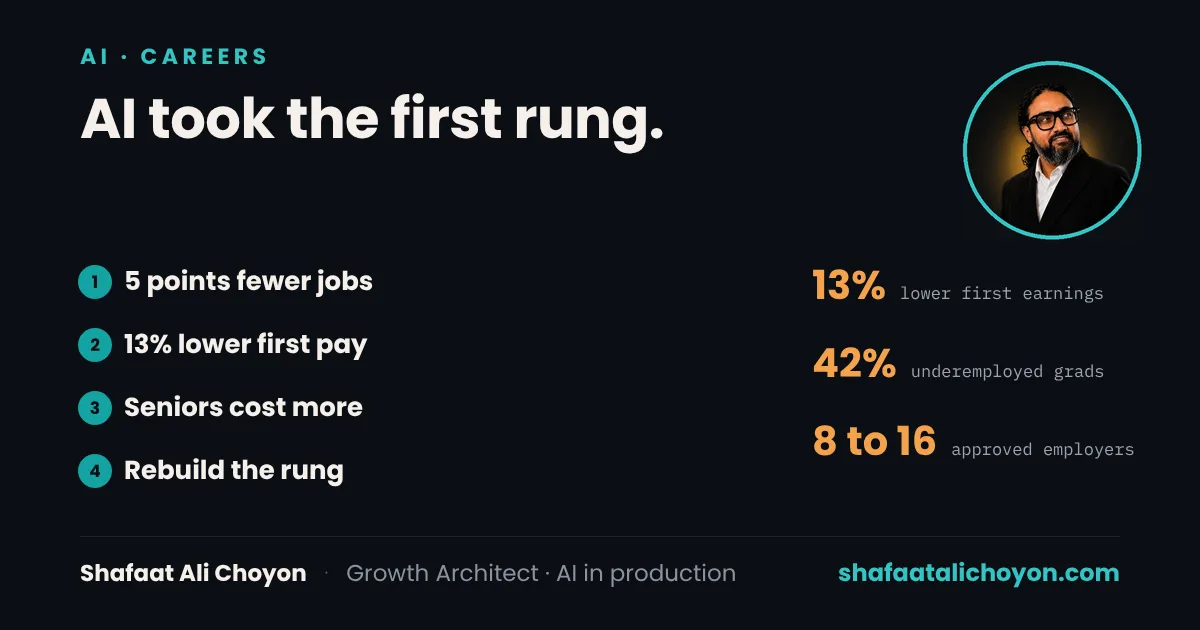
AI took the first rung of the career ladder
New Census research finds graduates of the most AI-exposed majors are 5 points less likely to have a job soon after graduating, and earn 13% less when they do. Cutting the junior hire looks like a saving. It is a loan against your future leadership bench.
Jan 1, 2027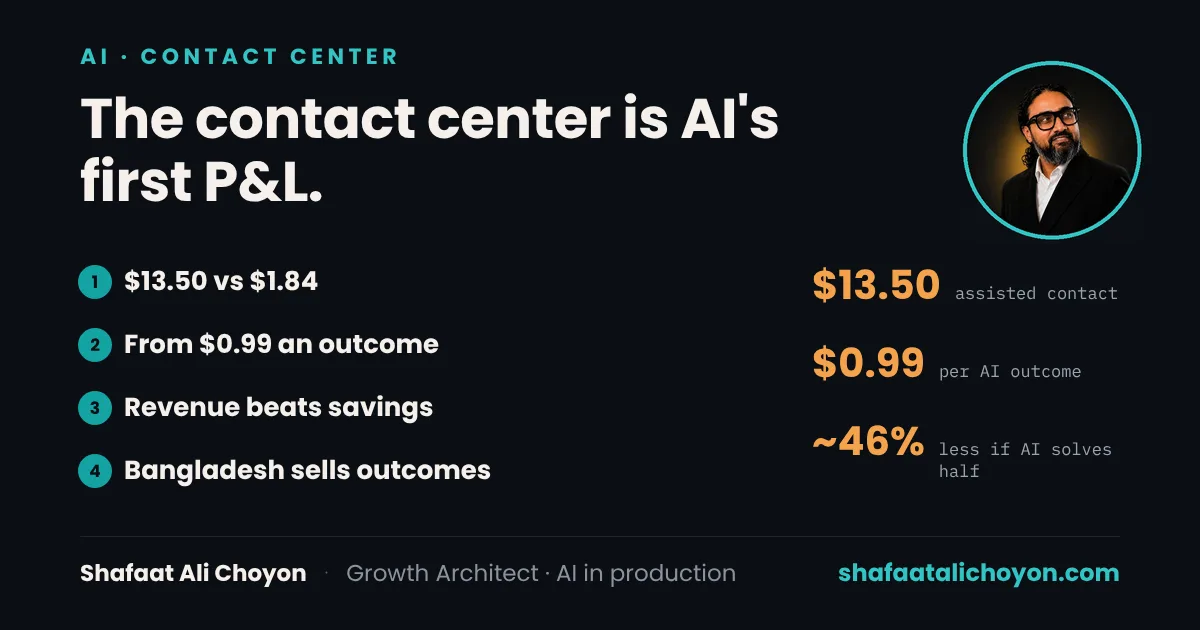
The contact center is the first AI P&L
Gartner puts a self-service contact at $1.84 and an assisted one at $13.50, and AI agents now sell from $0.99 an outcome. The contact center is where AI first shows up as a line on the books, and in health the bigger line is revenue.
Dec 22, 2026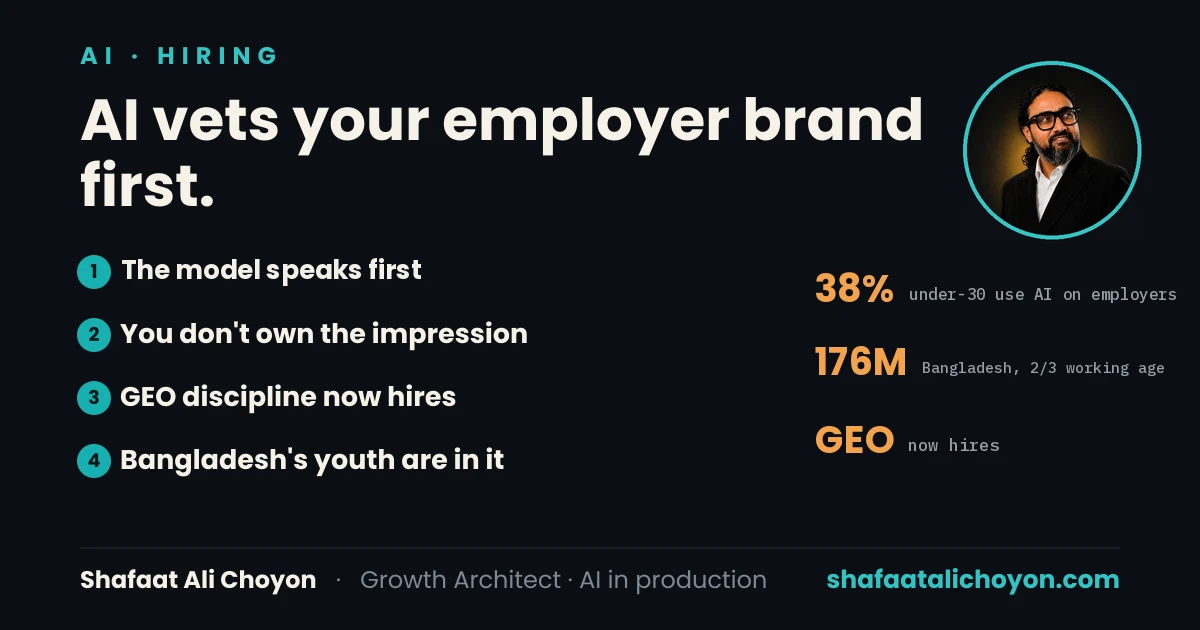
AI Now Vets Your Employer Brand Before a Candidate Does
38% of jobseekers under 30 used generative AI to research employers in 2025. A model's summary is now a candidate's first look at you. Employer brand needs GEO now.
Sep 28, 2026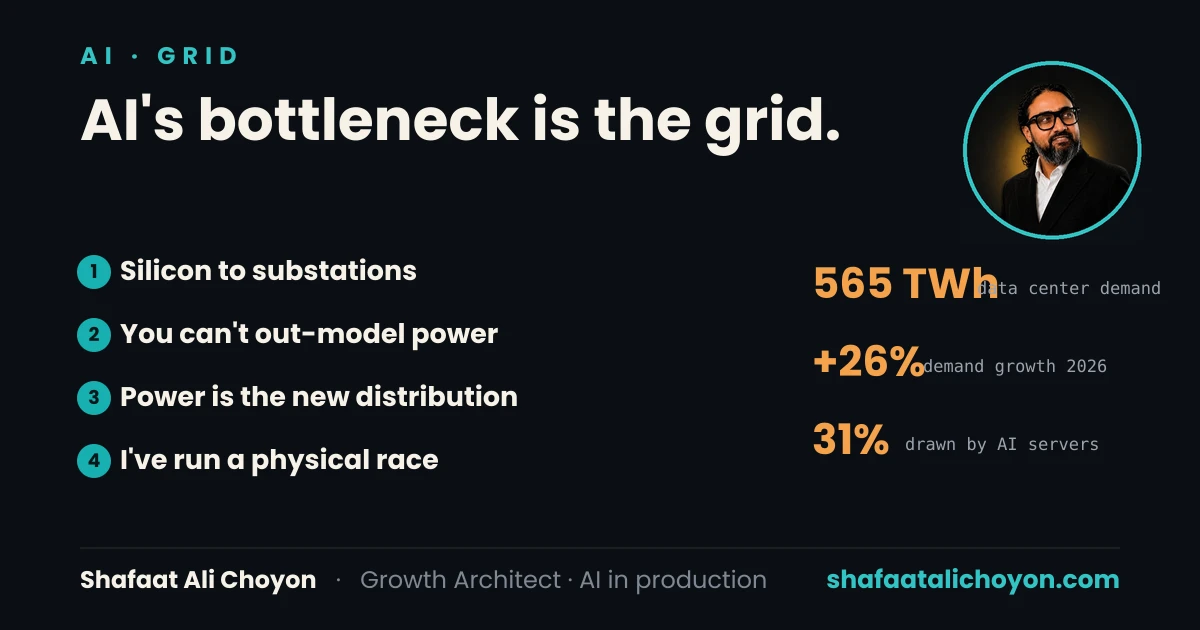
AI's Real Bottleneck Isn't the Model, It's the Grid
Data center electricity demand grows 26% in 2026 to 565 TWh, with AI servers drawing 31% of it. Power, not model quality, is now deciding who wins the AI race.
Sep 19, 2026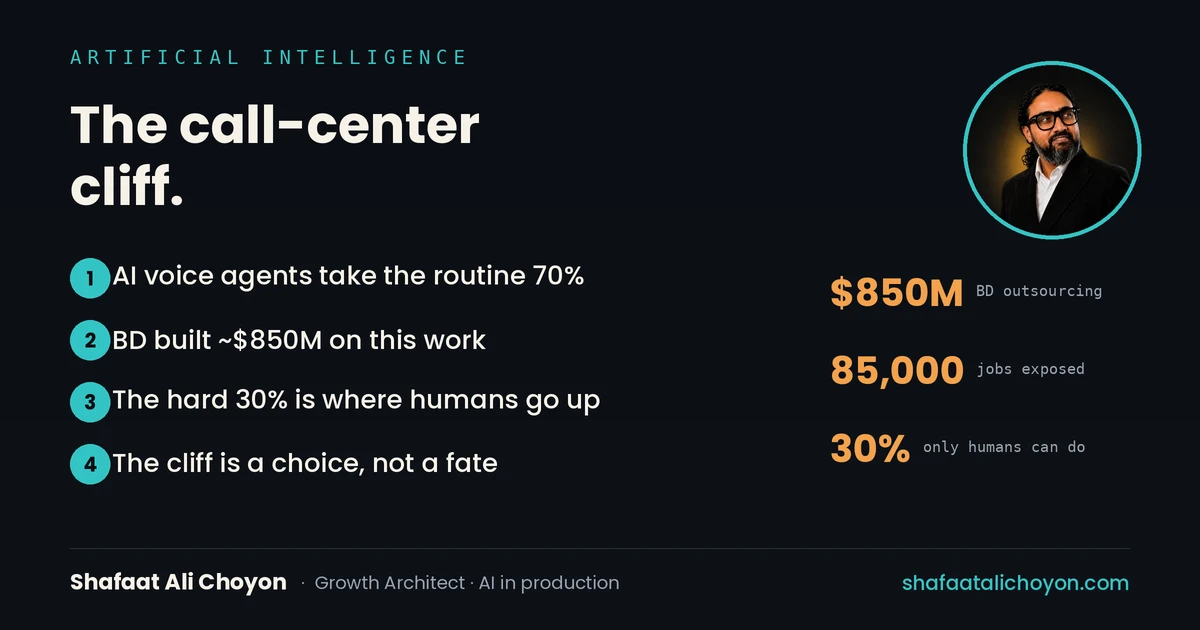
The call-center cliff and AI voice agents
AI voice agents are coming for the call-center economy: Bangladesh built ~$850M and 85,000 jobs on it. Can we move people up the value chain fast enough?
Sep 9, 2026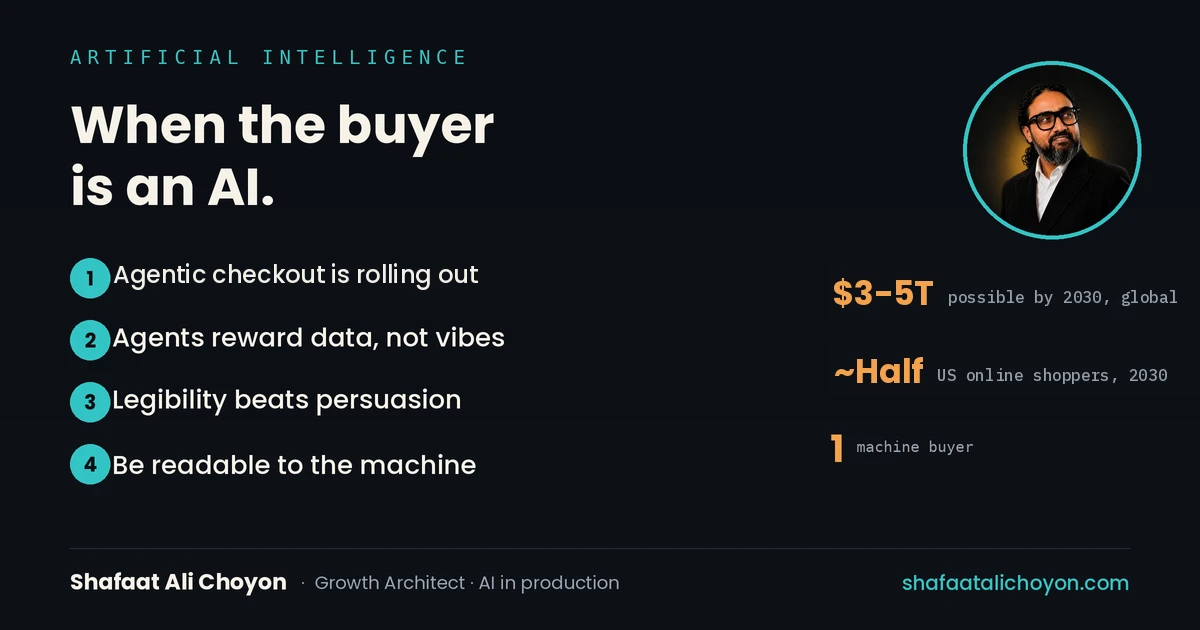
When the buyer is an AI, not a person
Google's agentic checkout and shopping inside ChatGPT mean the next shopper is an agent, not a person. Agentic commerce could reach $3 to 5T: few brands are built for it.
Sep 2, 2026No essays match that filter yet. Try another lens or clear the search.
Get new essays by email
New essays on AI, public health, health-tech and growth, occasional, no spam, unsubscribe anytime.
Same list as HSREP: you’ll get the essays and the occasional research note.