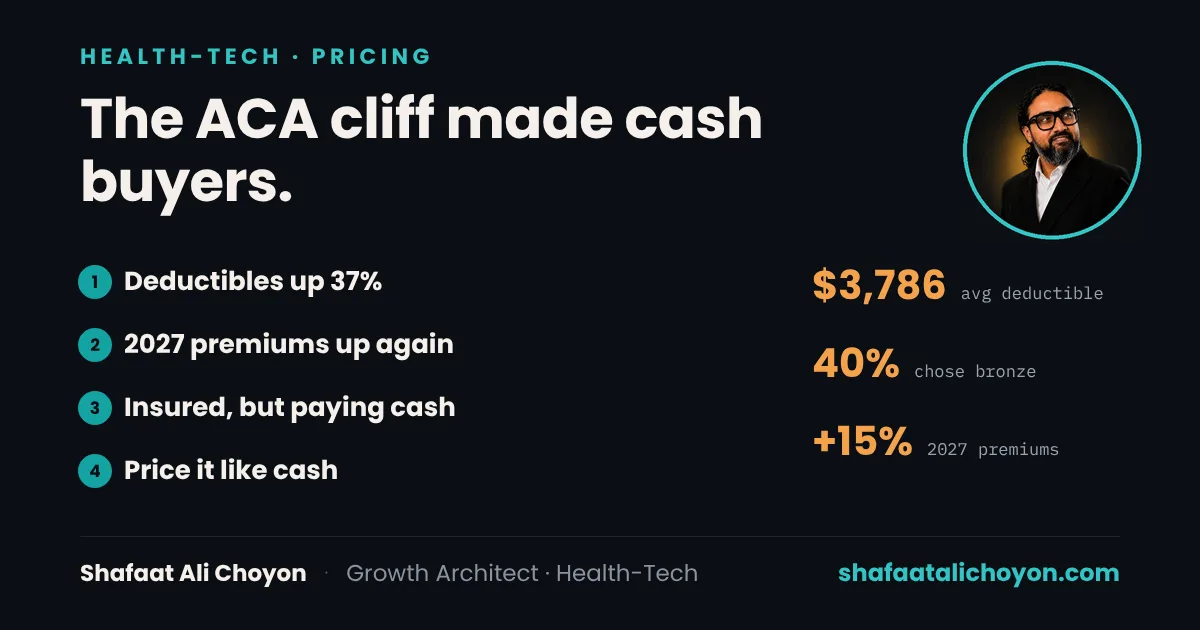
On 1 November, open enrollment for 2027 coverage begins on HealthCare.gov3, and the people shopping will be the ones who learned a hard lesson this year. When the enhanced premium tax credits expired at the end of 2025, sign-ups fell by more than a million to 23.1 million1, and the people who stayed moved to cheaper plans with bigger deductibles. The average marketplace deductible jumped 37%, to a record $3,7861. A patient with a $3,786 deductible has insurance for a bad year and pays cash for an ordinary one.
Why are ACA deductibles so much higher in 2026?
Mostly because people traded down. Bronze plans, the cheapest premiums with the highest deductibles, went from 30% of sign-ups in 2025 to 40% in 2026, from 7.3 million people to 9.2 million1. KFF estimates that without that shift the average deductible would have risen about 6%, not 37%. The premium was the number people could see at sign-up, so they cut it, and took the risk on the deductible instead.
The average monthly net premium still rose 58%, from $113 to $178. Young adults left fastest: sign-ups among 18 to 34 year olds fell by 542,000, almost half of the whole drop1.
2027 makes the deal worse
Insurers have filed for a median premium increase of 15% for 2027, across 276 insurers in every state2, citing rising care prices and a sicker pool now that healthier people have left. Seven insurers are leaving markets in 20 states3. The people shopping from 1 November face higher premiums again, so more of them will reach for bronze again, and the deductible cash market will grow again.
A $3,786 deductible is a cash market
Here is the part providers keep missing. Until a patient meets that deductible, every visit, scan and lab test is paid from their own pocket at whatever price the provider sets. They are insured in name and cash buyers in practice. And cash buyers behave differently: they ask the price first, compare it, delay what they cannot afford, and remember who surprised them with a bill.
Bangladesh has run on this logic for decades. Out-of-pocket payments are about 79%4 of what the country spends on health, so almost every patient is a cash buyer, every visit. The providers who grow there are the ones who designed for that, and the ones who did not simply lose the patient to the next clinic down the road.
What building for cash buyers taught me
At Praava Health, most patients paid out of pocket, so price was part of the product, not a back-office number. The biggest fix I worked on was not a discount. We ended a kickback-driven referral model and rebuilt referral and pricing around transparent economics, and lab margins moved from about 30% to 50%. Honest pricing did not cost us money; hidden incentives had been.
The same discipline drove growth. Services people chose to pay for again, at a price they could see before they arrived, took Praava to roughly 45% overall and 57% consumer growth a year, and corporate clients from 342 to about 1,400. I wrote in July that the US was drifting toward cash. The marketplace numbers say the drift became a jump.
What US providers should change before January
The deductible resets on 1 January, which is when the cash market is largest. Five changes I would make before then, and my free cash-pay price setter does the pricing math:
- Post the cash price. For the 20 services most patients use, show one price before the visit, not an estimate after it.
- Package the common paths. A diabetes check-up with labs, a prenatal visit bundle, an annual physical: one price, no surprises.
- Offer payment plans up front. Patients who know they can spread a bill do not delay the visit.
- Train the front desk to talk money. The first question a deductible patient asks is the price. A clear answer is the cheapest retention tool you have.
- Measure who comes back. Repeat visits by self-pay patients tell you whether the price and the experience were worth it.
The short version
- ACA marketplace deductibles rose 37% to $3,786 in 2026 after the enhanced subsidies expired and enrollees moved to bronze plans.
- 2027 premiums are set to rise a median 15%, and open enrollment runs from 1 November 2026 to 15 January 2027.
- A high deductible makes insured patients cash buyers for ordinary care until it is met.
- Bangladesh, where about 79% of health spending is out of pocket, shows that cash buyers reward posted prices, packages and no surprises.
- At Praava, transparent pricing raised lab margins from about 30% to 50% and growth followed.
If your patients had to pay the full price of their next visit before they booked it, would they still choose you?
Frequently asked questions
Why did ACA marketplace deductibles rise so much in 2026?
The enhanced premium tax credits expired at the end of 2025, and many enrollees switched to cheaper bronze plans, which carry higher deductibles. Bronze grew from 30% to 40% of sign-ups, and the average deductible rose 37% to $3,786. KFF estimates the rise would have been about 6% without that shift.
When is ACA open enrollment for 2027 coverage?
On HealthCare.gov it runs from 1 November 2026 to 15 January 2027. Choose a plan by 15 December for coverage that starts on 1 January. State-run marketplaces can set different dates.
How much will ACA premiums go up in 2027?
Insurers proposed a median increase of 15% for 2027, across 276 insurers in all 50 states and DC, according to a KFF analysis of rate filings. Proposed changes ranged from a 1% cut to a 54% increase and may change during state review.
Sources
- KFF, What we know so far about 2026 ACA Marketplace enrollment, premiums and deductibles. kff.org ↗
- KFF, How much and why ACA Marketplace premiums are going up in 2027 (3 August 2026). kff.org ↗
- Medical Daily, on 2027 open enrollment dates and insurer exits (13 October 2026). medicaldaily.com ↗
- UNB, reporting a Bangladesh Institute of Development Studies study (5 May 2026). unb.com.bd ↗
Md Shafaat Ali Choyon (MPH, CHES®, MBA, MCIM) is a growth, marketing and public-health strategist who builds and runs AI in production, with 17 years across telecom, fintech, e-commerce, consumer tech and healthcare in the US and Bangladesh. See the essays or the portfolio.